

Visit Palazzo Strozzi in Florence
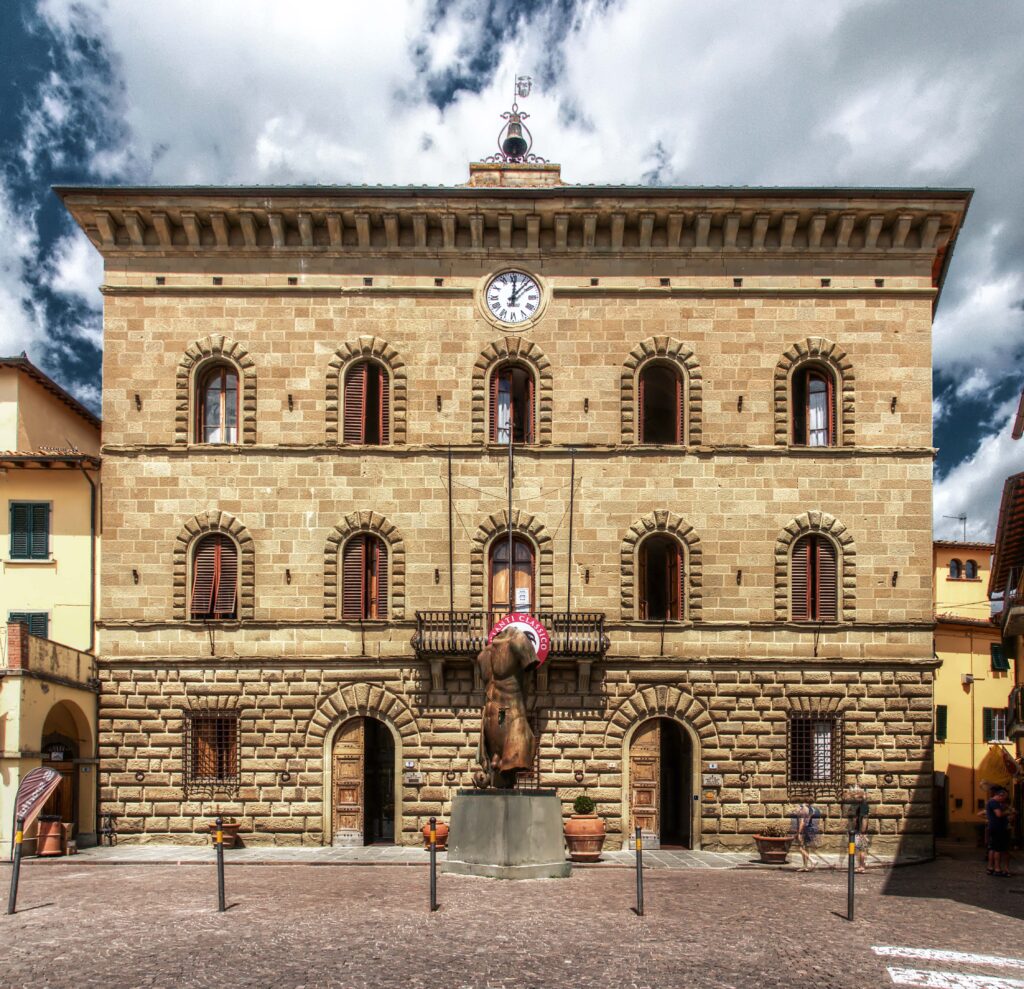
Palazzo Strozzi is one of the purest examples of Renaissance architecture, a perfect illustration of how proportion can become beauty. The palace doesn’t need to impress with tricks: the way the stone plays with daylight is enough to tell the story of a great era. It was Filippo Strozzi, a powerful banker and rival of the Medici, who dreamed it up at the end of the fifteenth century. He wanted a residence that would surpass all others, a building that spoke of wealth but also of culture. Benedetto da Maiano designed a solid, harmonious structure, as square as an orderly thought, with a rusticated façade that gradually becomes lighter as it rises. Each floor has its own tone, each window its own precise rhythm. Nothing is accidental: everything is built to last and to be looked at.
When you arrive in front of the great wooden portal, you immediately feel the weight of the stone, but as soon as you step inside you find yourself in a place of absolute calm. The inner courtyard, with its arches and pietra serena columns, is a small theatre of light. Depending on the time of day it changes colour, it changes sound. In the morning it’s bright, almost golden; in the afternoon it softens; in the evening, with artificial lights, it becomes a suspended piece of architecture. This is where you breathe the true soul of the palace: balance, silence, proportion.
Since 2006, Palazzo Strozzi has been home to a foundation that organises exhibitions and cultural events. It has become one of the most important exhibition venues in Italy, a meeting point between the Renaissance and contemporary art. Its large, light-filled rooms host artists and projects that enter into dialogue with the building’s history. In recent years, shows by Ai Weiwei, Marina Abramović, Bill Viola, Anish Kapoor have followed one another. Each exhibition reshapes the space, brings it back to life, but without ever betraying it: the stone remains the protagonist, discreet yet constant.
Visiting Palazzo Strozzi doesn’t just mean “going to a show”. It means stepping into a world where the city and art merge. The architecture isn’t just a backdrop: it accompanies you, guides you, suggests. It’s a slow experience, to be lived with your eyes and ears, following the sound of footsteps on the stone floor. Many visitors choose to stop for a few minutes in the courtyard, to read or have a coffee, because that sense of calm is rare in the heart of Florence.
There is also a whole carousel of experiences you only discover by being there. The first is arriving early, when the morning light comes in at an angle under the arcades and the first voices fade into the courtyard. A coffee at a small table, a notebook on the side and your eyes on the columns: the day begins with a lesson in balance. Then, during the visit, it’s worth looking up. The wooden ceilings of the piano nobile, the windows framing Florence’s rooftops, the staircases opening on the diagonal: every corner is a small masterpiece of perspective. In the afternoon, when the crowds thin out, you can step outside to look at the façade from Via Tornabuoni. From that distance you really catch the perfect proportions: the rougher rustication below, smoother above, as if the palace were breathing. At sunset, the stone turns a copper colour and the upper cornice lights up: it’s the best moment to take a photo, or simply to stand there in silence.
If you have time, you can come back in the evening, when the lights highlight the reliefs and the courtyard becomes almost intimate. It’s at that hour that you feel the presence of the Renaissance most clearly: not as a distant age, but as a way of thinking still alive, made of proportion and calm.
Besides the exhibitions, Palazzo Strozzi hosts talks, conferences and workshops that bring people closer to art. Even those who don’t usually love museums find something different here: the feeling of entering a place that doesn’t belong to the past, but to the present. Outside, the city keeps moving; inside, everything slows down. It’s this alternation that makes it special. Every visit is different. In winter, the courtyard is a refuge enclosed in stone. In summer, it’s a cool, bright oasis.
€60,50
Uffizi and Accademia: Combined Ticket with Reserved Entrance
Reserved entry to Uffizi & Accademia with flexible options plus city audio guidePalazzo Strozzi Map

Florence Pass: Unlock the Renaissance! Skip lines to the Uffizi, greet David at the Accademia, and gaze over rooftops from the Duomo with the Firenze Pass from Tiqets.com. One easy digital pass, endless masterpieces, more time for gelato, sunsets, and getting wonderfully lost in Florence’s golden streets, every single day.
Bundle & Save More
- BEST DEAL

- BEST DEAL
Useful info
Opening hours
Most exhibitions run daily 10:00–20:00, with a late Thursday opening until 23:00. Last entry is 1 hour before closing. The on-site ticket office usually operates 10:00–19:00 (Thu to 22:00). Always check your specific date.
Location
Right in the historic center at Piazza Strozzi, 50123 Firenze—a handsome Renaissance palazzo between Via Strozzi and Via Tornabuoni, a short stroll from the Duomo and Ponte Vecchio. It’s about a 6-minute walk from Santa Maria Novella station
How to get there
- Walk/Train: From Firenze S. M. Novella it’s an easy walk through the center
- Tram: T1 → Alamanni Stazione or T2 → Unità puts you a few minutes away
- Bus: Handy stops nearby include Stazione SMN, Piazza del Duomo, Via Tornabuoni, Piazza della Repubblica.
- Car/parking: If you must drive into the ZTL, nearby garages include Garage delle Terme (often 10% discount for Strozzi visitors).
Best time to visit
Arrive right at 10:00 for quiet rooms—or make it a Thursday late session when the palace stays open into the evening (great courtyard vibes). Some courtyard installations are free to see, so you can dip in even if you’re short on time.
Duration of the visit
Count on 60–90 minutes for a main-floor exhibition (the official audio guide is ~1 hour), plus a few extra minutes to linger in the courtyard and bookshop.
Accessibility
The palace is barrier-free: step-free ramp entrance on Via Strozzi, elevator in the courtyard to the exhibition floor, accessible restrooms, and a wheelchair available from the cloakroom (ask at the ticket office). They also offer access programmes for visitors with autism, Alzheimer’s, Parkinson’s, and other needs, plus a sensory & facility map.
Opening hours
Most exhibitions run daily 10:00–20:00, with a late Thursday opening until 23:00. Last entry is 1 hour before closing. The on-site ticket office usually operates 10:00–19:00 (Thu to 22:00). Always check your specific date.
Location
Right in the historic center at Piazza Strozzi, 50123 Firenze—a handsome Renaissance palazzo between Via Strozzi and Via Tornabuoni, a short stroll from the Duomo and Ponte Vecchio. It’s about a 6-minute walk from Santa Maria Novella station
How to get there
- Walk/Train: From Firenze S. M. Novella it’s an easy walk through the center
- Tram: T1 → Alamanni Stazione or T2 → Unità puts you a few minutes away
- Bus: Handy stops nearby include Stazione SMN, Piazza del Duomo, Via Tornabuoni, Piazza della Repubblica.
- Car/parking: If you must drive into the ZTL, nearby garages include Garage delle Terme (often 10% discount for Strozzi visitors).
Best time to visit
Arrive right at 10:00 for quiet rooms—or make it a Thursday late session when the palace stays open into the evening (great courtyard vibes). Some courtyard installations are free to see, so you can dip in even if you’re short on time.
Duration of the visit
Count on 60–90 minutes for a main-floor exhibition (the official audio guide is ~1 hour), plus a few extra minutes to linger in the courtyard and bookshop.
Accessibility
The palace is barrier-free: step-free ramp entrance on Via Strozzi, elevator in the courtyard to the exhibition floor, accessible restrooms, and a wheelchair available from the cloakroom (ask at the ticket office). They also offer access programmes for visitors with autism, Alzheimer’s, Parkinson’s, and other needs, plus a sensory & facility map.
what to see in palazzo strozzi florence
In the heart of Florence’s historic centre, a few steps from Via de’ Tornabuoni, stands Palazzo Strozzi, one of the most representative buildings of Renaissance architecture. The grandeur of its façade and the balance of its proportions tell of the ambition of one of the most influential families in fifteenth-century Florence. Today the palace is an important cultural centre, where Renaissance architecture meets major exhibitions of ancient, modern and contemporary art.
Construction began in 1489 at the behest of Filippo Strozzi the Elder, a wealthy Florentine merchant and banker who wanted to build a residence capable of competing with that of the Medici family. After years of political exile, Filippo had returned to Florence with the intention of reaffirming his family’s prestige. The design is traditionally attributed to Benedetto da Maiano, while supervision of the works subsequently passed to Simone del Pollaiolo, known as il Cronaca. Construction continued even after the death of its patron, until its completion in the sixteenth century.
The first thing that strikes you when looking at Palazzo Strozzi is its imposing stone façade, characterised by the rusticated masonry that covers the building’s three floors. The large arched windows, stringcourses and monumental upper cornice create an ensemble of extraordinary balance. Every element seems designed to convey solidity, prestige and harmony, according to the architectural ideals of the Florentine Renaissance.
Passing through the main entrance, you reach the magnificent Renaissance Courtyard of Palazzo Strozzi, one of the most evocative spaces in the building. Surrounded by elegant porticoes with columns and rounded arches, this space retains the charm of the former noble residence. The natural light changes throughout the day, casting shadows on the stone walls and highlighting the geometry of the architecture. The courtyard is generally accessible free of charge and periodically hosts artistic installations, events and cultural initiatives.
From the courtyard, the monumental staircase leads to the Piano Nobile, where the Strozzi family’s reception rooms were once located. Today these large rooms host the main temporary exhibitions organised by the Fondazione Palazzo Strozzi. The Renaissance spaces are transformed with each exhibition, welcoming paintings, sculptures and installations from important international museums and collections. It is precisely this constant change that makes every visit different from the last.
Among the most important cultural events of 2026 is Broken – The Power of the Fragment, the exhibition scheduled from 25 September 2026 to 24 January 2027. The exhibition brings together more than 80 works from antiquity to contemporary art, with works by artists such as Michelangelo, Auguste Rodin and Louise Bourgeois. The itinerary invites visitors to observe sculpture from an unusual perspective, showing how an incomplete or damaged work can acquire new meanings over time. To learn more about the exhibition, you can consult the page dedicated to tickets for the Broken exhibition at Palazzo Strozzi.
Descending into the underground rooms, you encounter the Strozzina, an exhibition space that retains a very different character from the large rooms of the Piano Nobile. The special ambiance of its vaults and close architecture make it ideal for an artistic project and cultural event. The programme rotates year-round, presenting new possibilities to discuss the historic building and the languages of contemporary art.
Palazzo Strozzi is not only a place where exhibitions are held, but also a place for the promotion of culture. The Foundation arranges educational events, meetings, workshops and programs for families, students and visitors of all ages. Accessibility is emphasized and consideration is given to how to make art more accessible even to those who traditionally don’t visit museums.
A walk through Palazzo Strozzi is then an opportunity to uncover two basic elements of Florentine culture. On the other hand, the majesty of the Renaissance architecture and the history of a family who wished to make an unforgettable impression on the city. On the other side, the space’s life force that keeps going and new exhibitions and international artistic projects. A world of the 15th century and a world of the present day, but with the charm of the past.
FAQ
Do I Need to Book Tickets in Advance for Palazzo Strozzi Florence?
Yes. For most seasonal exhibitions Palazzo Strozzi uses timed-entry tickets and online booking is strongly recommended to avoid disappointment on busy days.
What Types of Tickets Are Available for Palazzo Strozzi Florence?
You’ll typically find standard timed-entry exhibition tickets, optional audio guides (Italian/English available), and occasionally guided tours or combo offers that include special shows. Audio guides can be pre-paid and collected on site.
Where Can I Buy Tickets for Palazzo Strozzi Florence?
Buy direct from the Fondazione Palazzo Strozzi website for the most official info, or use trusted resellers like Tiqets for instant mobile QR tickets and easy checkout, handy if you want tickets delivered straight to your phone.
Can I Get a Refund or Reschedule My Tickets?
Policies vary by ticket and exhibition. Some tickets are changeable, others are final sale — always check the specific ticket’s terms before purchase. If you book via Tiqets, their product pages show refund/reschedule rules clearly.
Are There Discounts Available for Tickets?
Yes! Palazzo Strozzi often offers reduced rates (students, seniors, children) and your exhibition ticket can give you discounts on related events. Watch the ticket page for any current promos.
What Are Combination Passes and Are They Worth It?
City passes like the Florence Card bundle access to many Florentine museums (72-hour format) and may include Palazzo Strozzi, great value if you plan to visit multiple museums within a few days. Do the quick math: a pass pays off if you’ll use several included sites
What Happens If I Miss My Time Slot?
Rules vary. Some exhibitions will try to admit you at the next available slot if capacity allows; others treat missed timed entries as a no-show. Contact the box office or your ticket provider (e.g., Tiqets) as soon as you know you’ll be late.